
Santo Domingo in a day: what is worth the drive from Punta Cana
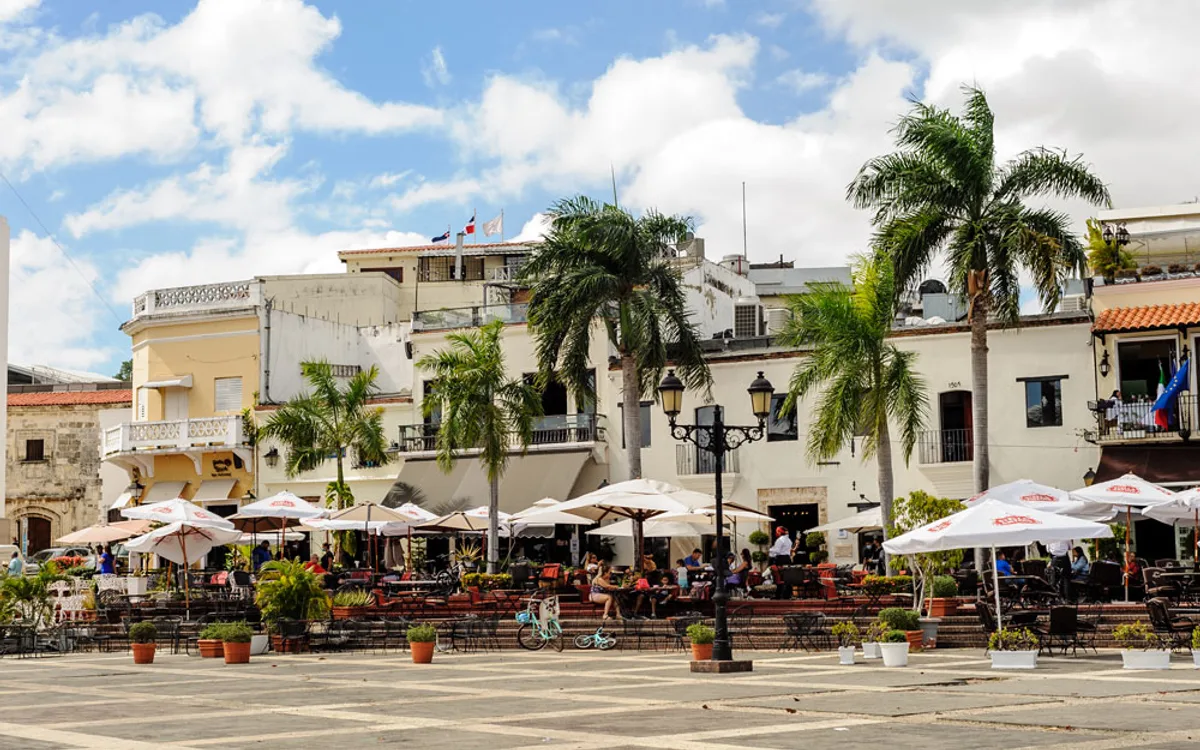
Santo Domingo is two and a half hours west of Punta Cana on a good motorway, and it is the reason a lot of people end up glad they rented a car. The excursion buses do this trip too. They do it on a fixed schedule, with a fixed lunch, and they leave the Colonial Zone at the exact hour it becomes pleasant.
This is how to do the same day at your own pace, with the numbers you need.
Getting there
Roughly 200 km on the Autovía del Coral and then the Autopista del Este. Both are real motorways in good condition. The booths take RD$100 for a car and you will pass three or four of them, so put RD$800 in small notes in the door pocket and forget about it.
Leave Bávaro at seven and you are parking in the capital before eleven. Leave at nine and you arrive in city traffic, which is a different experience entirely.
Los Tres Ojos, on the way in
The park sits on the eastern edge of the city, which is to say directly on your route, before you reach any traffic worth the name. Stop here first.
What it is: a collapsed cave system with three open freshwater lagoons below ground level, plus a fourth you reach on a hand-pulled raft. The water is startlingly clear. The light comes down through the roof openings in shafts. Photographs do not really work. It does not matter.
Entry is a small amount in pesos, paid in cash at the ministry window; the raft across to the fourth lagoon costs a little more. Cards are unreliable here, so bring notes. Gates open at nine, and the hour between nine and ten is yours before the tour coaches arrive from the resorts.
Allow an hour. The steps down are wet and uneven.
The Colonial Zone
Park at the edge in a guarded lot — a few hundred pesos for the day — and walk. This is not a suggestion about charm. Those streets were laid for pedestrians and horses in the early 1500s, and a modern car in them is a slow, wide problem looking for somewhere to turn round.
Calle Las Damas is the oldest paved street in the Americas, and walking it is the cheapest thing on this page. Sixteenth-century façades, palaces, the odd museum. Shade for most of the day.
Alcázar de Colón is the house Diego Columbus built for himself and María de Toledo in the 1510s, and the oldest surviving viceregal residence in the Americas. It is furnished as a period interior rather than left as bare stone, which makes it one of the few buildings here where you get a sense of how the rooms were used. Entry is RD$100, it opens Tuesday to Sunday from 9:00 to 18:00, and it is closed on Mondays — worth checking against your day before you drive two hours.
It stands on Plaza de España, which is where you will want to eat. Which brings us to the tavern.
Pat’e Palo has been serving on this square since 1505 and claims to be the first tavern in the New World. Today it is a European brasserie with a terrace facing the Alcázar, and it is not cheap. You are paying partly for the address. Have coffee there instead if you would rather spend lunch elsewhere — the terrace is the point.
Two things most visitors skip
The Faro a Colón is a vast cross-shaped monument on the far side of the Ozama river, built to hold what the Dominican Republic maintains are the remains of Christopher Columbus. It was consecrated by John Paul II in 1992, and the popemobile from that visit is still parked nearby. The beam that gives it its name is only switched on for major national occasions, and when it is, it throws a cross onto the clouds visible for miles.
It divides opinion — the building is monumental in the heavy 1980s sense and the neighbourhood around it was cleared to make room. Go for the scale and the history, not for a pleasant hour.
The Teleférico is not a tourist attraction and that is precisely its appeal. It is a commuter cable car, built to move people from the barrios on the eastern bank into the city, and it connects four stations across about five kilometres: Gualey, Los Tres Brazos, Sabana Perdida and Charles de Gaulle. A trip costs RD$20 and the same fare transfers you onto the Metro.
From the cabin you look down on ordinary life — schools, colmados, laundry, football on concrete, the river and its bridges. It is clean. It is quiet. And to everyone else in the car with you it is entirely unremarkable. Behave accordingly, keep your phone in your pocket at the stations, and it is one of the more honest half-hours you can spend in this city.
The order that works
Seven o’clock departure. Los Tres Ojos from nine to ten. Parked at the edge of the Colonial Zone by eleven, and then walking: Las Damas, the Alcázar, lunch on Plaza de España, and the streets in between until the light goes soft around five.
If you still have appetite for it, drive to the Faro before dinner. If not, eat in the Zone and start home at eight, when the Autopista del Este is empty and the drive takes less than the two and a half hours it took coming in.
One practical note for the way back: the exits on the Coral are far apart and the signs assume local knowledge. Set the route before you pull out of the car park rather than at 100 km/h in the dark.
Eating
We keep a separate list of where to eat in the capital — twenty-something places by neighbourhood and by what they actually do well, from Dominican cooking to the Peruvian and Japanese places the city does better than most people expect.
And if you have not sorted the car yet: renting in Punta Cana includes insurance and unlimited mileage, which on a 400 km round trip is not a detail.
Ready to hit the road?
Rent a car in Punta Cana with no hidden fees — full insurance and unlimited mileage included.
Search cars for your trip