
Dominican Republic E-Ticket in 2026: the free official form, step by step
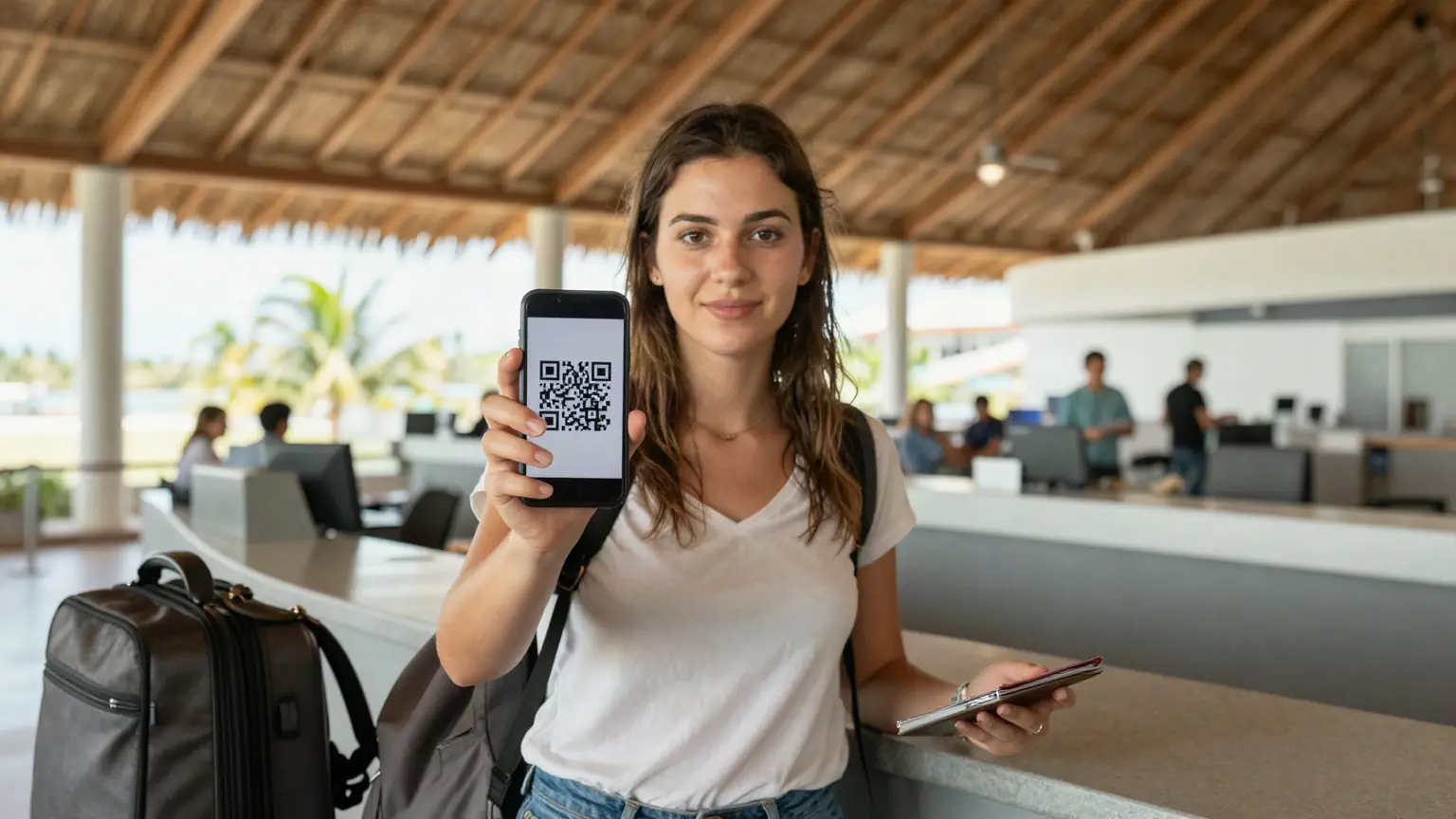
Quick answer. If you fly into or out of the Dominican Republic on a commercial flight, you have to complete the official E-Ticket. It is free, it lives at eticket.migracion.gob.do, and it takes about five minutes. Fill it in before you reach the airline counter, save the QR code where you can open it without internet, and ignore any site that wants to charge you for the form itself.
I live in Punta Cana and watch this go wrong in the same few ways: someone pays a third-party site $60 for a free form, someone fills it in at the airport on hotel Wi-Fi that will not load, someone brings a passport with a torn page. None of it is dramatic. All of it is avoidable in the ten minutes before you close your suitcase.
What the E-Ticket actually is
It is one digital form that carries your immigration and customs information into the country and out of it. The Directorate General of Migration describes it as mandatory for every passenger, Dominican or foreign, entering or leaving the country, lists the service as free, gives about five minutes as the completion time, and names the laws behind it. The data goes to Migration and to Customs.
The government domain is the one above. Other websites will offer to complete it for you, and some of them rank well in search. Paying them is a choice, not a requirement, and the form itself has no fee at any point.
Why a document check is worth ten minutes
In July 2026 Migration turned away 116 foreign travellers at the country’s airports and ports. The agency’s own report lists 26 refusals over damaged passports and 20 over missing documentation, alongside cases involving security records and people trying to work without the right visa.
That is a small number against millions of arrivals, and an ordinary tourist with ordinary documents is not the profile being stopped. It is still the clearest argument I know for looking at your passport properly before you fly, rather than at the check-in desk.
When to fill it in
The old 72-hour rule is gone. The official entry requirements page now says the form can be completed as soon as you have your flight information, even months in advance, but that it must be done before you arrive at the airline counter, because the airline can ask for it before boarding.
My own habit is simpler. I complete both directions once the flights and the hotel are settled, usually a few days out. Filling it in months early buys nothing when flight numbers and hotels still change.
What the form asks for
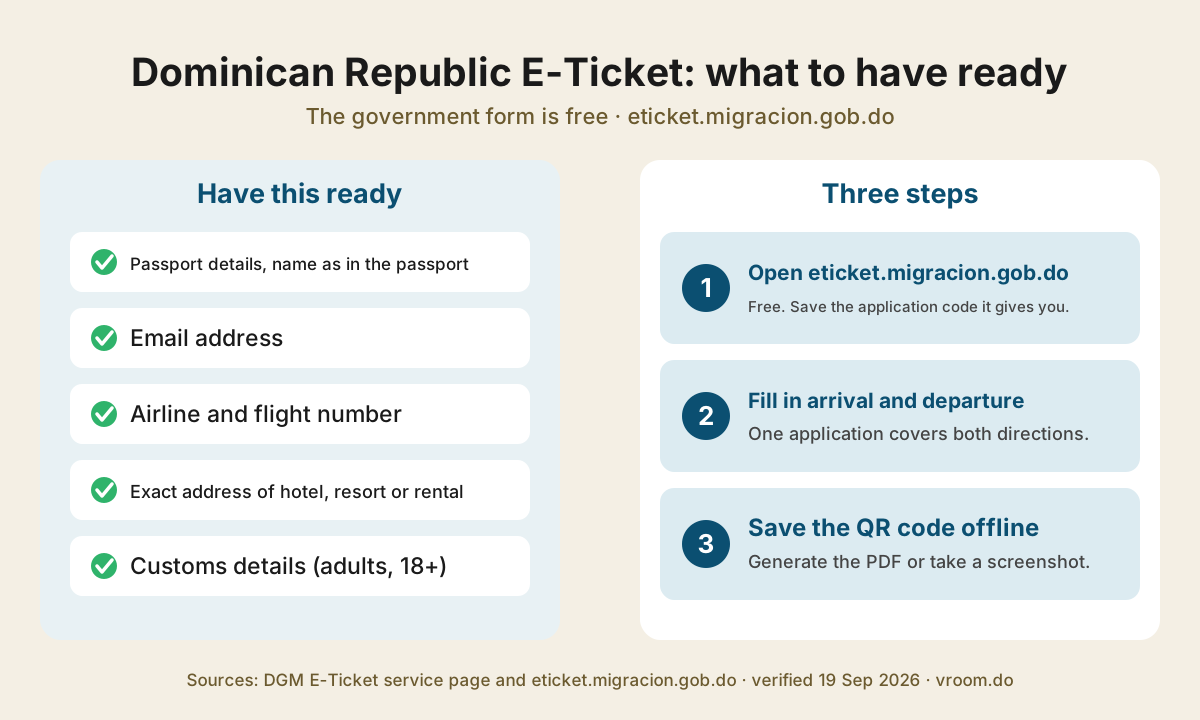
- Passport details and your full name exactly as the passport spells it.
- An email address.
- Airline and flight number.
- The exact address of your hotel, resort, villa or rental in the Dominican Republic.
- Customs information, which only adults aged 18 and over complete.
- The same details for relatives if you are filling in one family form.
Staying in a villa or an Airbnb is where people stall. The tourism ministry asks for the complete address, including province, municipality and sector, so message your host for it before you open the form rather than halfway through.
Save the QR code somewhere offline
When the form is finished the system generates a ticket with a QR code, and the portal offers a PDF you can keep on your device. Do that, and take a screenshot as well. The tourism ministry says plainly that the code can be printed or saved as a screenshot.
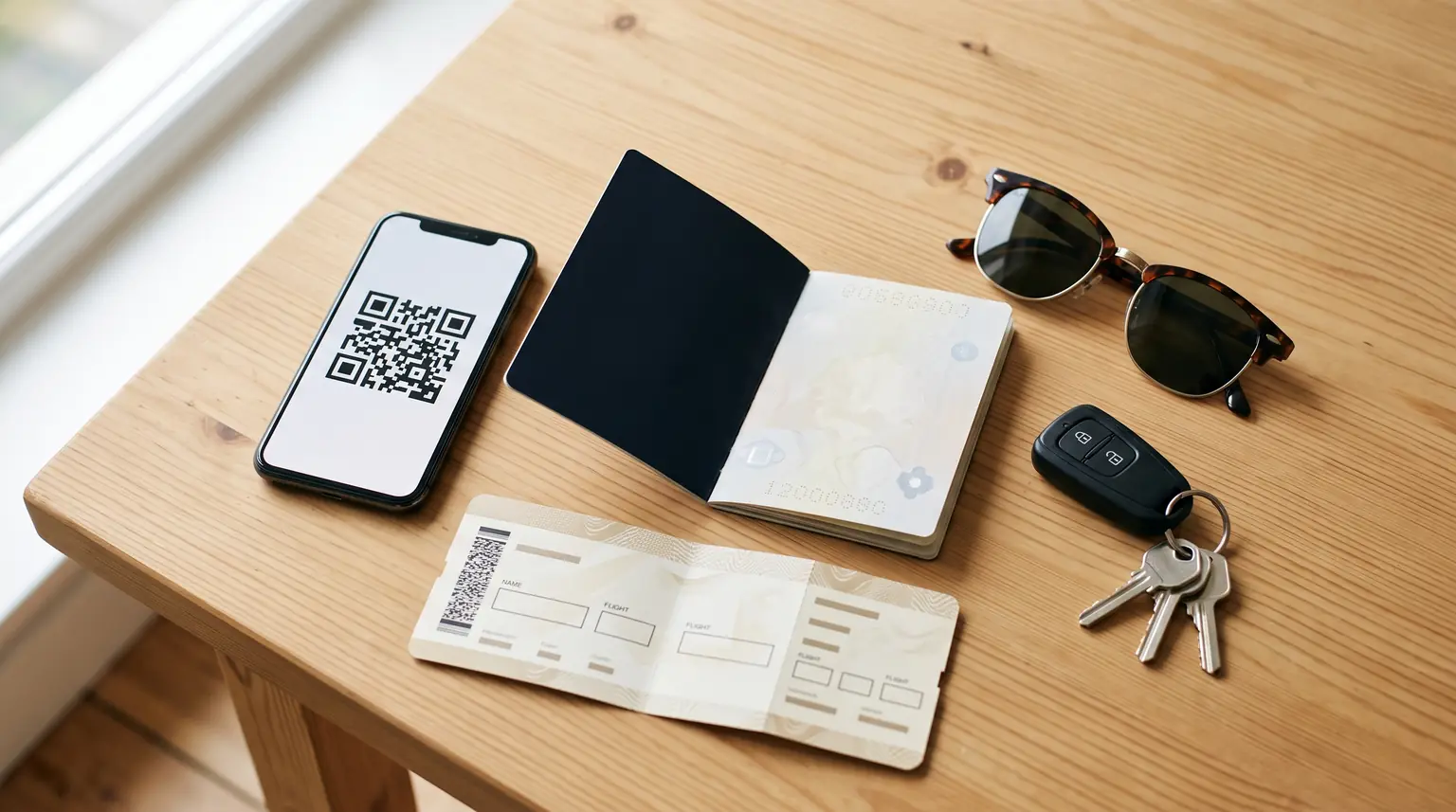
The reason is not that anyone will refuse a traveller whose phone is offline. It is that airport Wi-Fi at the moment you need it is a bad thing to depend on, and a screenshot costs you nothing.
One form can cover up to seven people
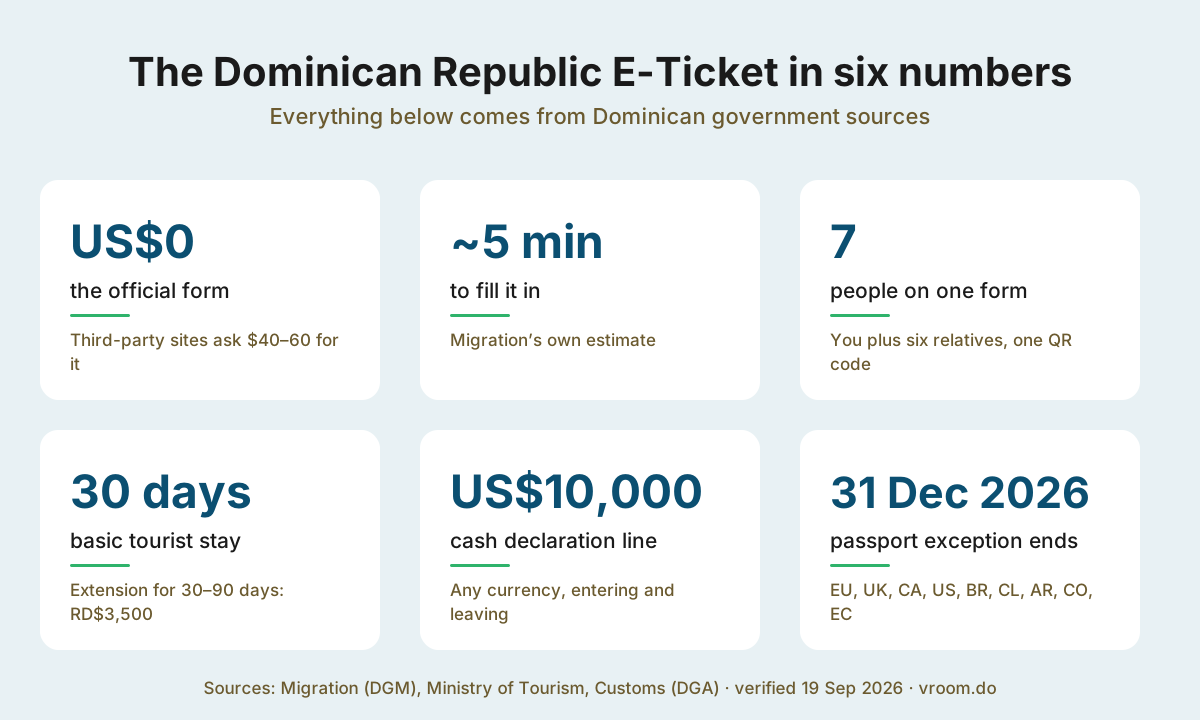
A family does not need a separate application each. One user can include themselves plus six relatives, seven people in total, and the system issues a single family QR code. Groups larger than that need another form. Children do not fill in the customs section; adults do.
Passports: the six-month rule and the 2026 exception
The standard tourist requirement is a passport valid for at least six months. Through 31 December 2026 there is an exception for tourists who are nationals of the European Union, the United Kingdom, Canada, the United States, Brazil, Chile, Argentina, Colombia and Ecuador: their passport has to stay valid for the stay and through the date they leave the country.
Two things worth separating here. The exception is about passport validity, not about visas — the lists are not the same, and the tourism ministry names Russia, Ukraine, Kazakhstan and Mexico among the markets that do not need a tourist visa but are not in the validity exception. And a valid passport still has to be a usable one. Twenty-six of July’s refusals were about physical damage: a torn page, water damage, a scuffed identity page.
Return ticket, visa, health rules
Foreign tourists are expected to be able to show they will leave. The entry requirements list an inbound and a return ticket, along with an address in the country and means to cover the stay. If your plans are open-ended, ask your airline before the airport rather than assuming a one-way ticket will pass.
On visas, most of the country’s largest markets arrive without one, including the United States, Canada, the United Kingdom, EU countries, Russia, Ukraine, Kazakhstan, Mexico and many others. The ministry also notes that travellers of any nationality may qualify if they are legal residents of, or hold a valid visa for, the United States, Canada, the United Kingdom or the Schengen Area. Unusual cases are worth confirming with a Dominican consulate before you buy a non-refundable ticket.
For health requirements, the travel FAQ states that since 23 April 2022 no COVID-19 vaccination card, PCR or antigen test is required to enter. Yellow fever is the rule that still catches people: proof of vaccination is required from passengers arriving from the Brazilian states of Espírito Santo, Minas Gerais, Rio de Janeiro and São Paulo, with exemptions for children under ten months, pregnant women and airport transits under twelve hours, and from passengers coming from Venezuela or who have been there within the previous 14 days.
Cash: the US$10,000 line
The customs half of the form is where money matters. Dominican Customs puts it directly in its traveller manual: carrying money is not taxed, but anyone entering or leaving with more than US$10,000 — or the equivalent in Dominican pesos or another currency, or in bearer instruments — must declare it and be able to document where the funds came from.
This is enforced in both directions, and the amounts involved are not always small. On 4 September 2026 customs officers seized US$600,700 from a passenger leaving Las Américas airport for Panama with the cash undeclared in hand luggage. Declaring is a form. Not declaring is a case file.
How long you can stay, and what an overstay costs
Tourist stays are handled around an initial 30 days. Beyond that, Migration runs an extension service with a published fee table: RD$3,500 for 30 to 90 days, RD$5,600 for three to nine months, and up from there, with the extension itself free to apply for and payable online or at the airport.
Paying a fee on the way out is not the same as being in order, though. If you are planning to stay for months rather than weeks, use the extension process properly instead of treating the desk at departure as the plan.
My pre-flight checklist
- Passport valid for the trip and physically undamaged.
- Checked whether the six-month rule or the 2026 exception applies to my nationality.
- Return or onward ticket booked.
- E-Ticket completed at the official free site, both directions.
- QR code saved as a PDF and a screenshot, available offline.
- Exact address of the hotel, resort or rental written down.
- Visa requirement checked for the passport I am actually travelling on.
- Yellow fever requirement checked against where I am flying from and where I have been.
- Cash over US$10,000 declared, with paperwork for it.
- Driving licence in my wallet if I am renting a car.
That last line is not filler. If a car is part of the plan, our guide to renting at Punta Cana airport covers the counter and deposit side, and the driving guide covers what the roads are actually like. If you would rather be met and driven, airport transfers are the other route out of the terminal.
Dominican Republic E-Ticket FAQ
Is the Dominican Republic E-Ticket free?
Yes. The official government form at eticket.migracion.gob.do costs nothing, and the Directorate General of Migration lists the service as free with a completion time of about five minutes. A site that charges $40 or $60 for the form is a third-party service, not a government fee.
Do I need an E-Ticket for Punta Cana Airport (PUJ)?
Yes. The form applies to every passenger entering or leaving the Dominican Republic on a commercial flight, whichever airport you use, including Punta Cana International Airport.
Do I need an E-Ticket when I leave the country?
Yes. The E-Ticket covers both entry and exit, and one application can hold both directions, so you can complete them together once your flights are confirmed.
Do I still have to fill it in within 72 hours of the flight?
No. The tourism ministry states that the 72-hour rule no longer applies and that the form can be completed as soon as you have your flight details, even months ahead. It must be done before you reach the airline counter.
Can one E-Ticket cover my family?
Yes, up to seven people on one form: the person filling it in plus six relatives. The system issues a single family QR code. A larger group needs an additional form.
What if I typed the wrong flight number or hotel?
Open the form again with the application code you received when you started it and correct the details. That code is the only way back into an application you have not finished.
Does my passport need six months of validity in 2026?
The standard rule is six months. Through 31 December 2026 an exception applies to tourists from the EU, the UK, Canada, the USA, Brazil, Chile, Argentina, Colombia and Ecuador, whose passport only has to stay valid through the date they leave the country.
Do I need a COVID test or vaccination certificate?
No. Since 23 April 2022 passengers do not have to show a COVID-19 vaccination card, PCR or antigen test to enter the Dominican Republic. Yellow fever rules still apply to arrivals from certain places.
How much cash can I bring without declaring it?
Carrying money is not taxed, but more than US$10,000 in cash or bearer instruments, in any currency, must be declared to customs on entry and on exit, with documents showing where the money came from.
Do cruise passengers need the E-Ticket?
No. Passengers arriving on cruise ships, ferries, non-commercial vessels and private flights use the physical customs and embarkation forms instead.
A trick for your next trip
Migration built a frequent-traveller feature into the form: starting a new E-Ticket from a previous application code cuts the time to fill it in by about half, because the traveller details carry over and you mainly update the flight. The same release also let one application cover arrival and departure together. If you come to the Dominican Republic more than once, keep the code and the confirmation email from your last trip.
The short version
Use the official site, fill the form in before you get to the counter, keep the QR code offline, check the passport rule that applies to your nationality rather than the one that applies to someone else’s, and declare money above the customs line. Everything else about arriving here is easier than the paperwork suggests. Money, cards and the deposit side of a rental are in our Punta Cana money guide; if you want to ask something specific about the area, we are here year-round.
Sources
- Directorate General of Migration: E-Ticket service page; official E-Ticket portal
- Directorate General of Migration: 116 foreigners denied entry in July 2026; stay-extension service and current fees; E-Ticket improvements with the frequent-traveller code
- Ministry of Tourism (Go Dominican Republic): entry requirements; travel FAQs
- Directorate General of Customs: traveller manual; undeclared currency seized at Las Américas airport, 4 September 2026
Entry rules, fees and health requirements change, and this guide was checked against the official Dominican government sources above on 19 September 2026. Verify the rules that apply to your own passport and itinerary before you fly, especially if your nationality, visa status or recent travel history is unusual.
Ready to hit the road?
Rent a car in Punta Cana with no hidden fees — full insurance and unlimited mileage included.
Search cars for your trip